
What CuSn8 is.
CuSn8 is a bronze made of copper with about 8% tin. Brands such as THORN and BODERRY use it for divers and field watches. THORN’s SHY038 lists a CuSn8 tin bronze case with a 316L steel case back.
How patina develops.
- Fresh bronze is a bright, golden pink.
- Within weeks it darkens to a warm brown with handling and air.
- Sea water and sweat speed up the change and can produce green tones.
- Polishing returns the original colour, and the process starts again.
Skin and cuffs.
Bronze can leave a green or grey mark on skin, especially in warm, damp weather. This is harmless and washes off, and a steel case back keeps most of the case away from your wrist. Wearing the watch on a strap rather than a bracelet reduces contact.
Care tips.
- Wipe it with a soft cloth after swimming.
- Use a mild soap and a soft brush to remove salt and grime.
- Avoid polishing if you want the patina to build.
Is bronze for you?
If you enjoy a watch that changes, bronze is a rewarding material. If you prefer a case that stays the same, choose steel or titanium. Case materials explained compares them.
Bronze watches we reviewed.
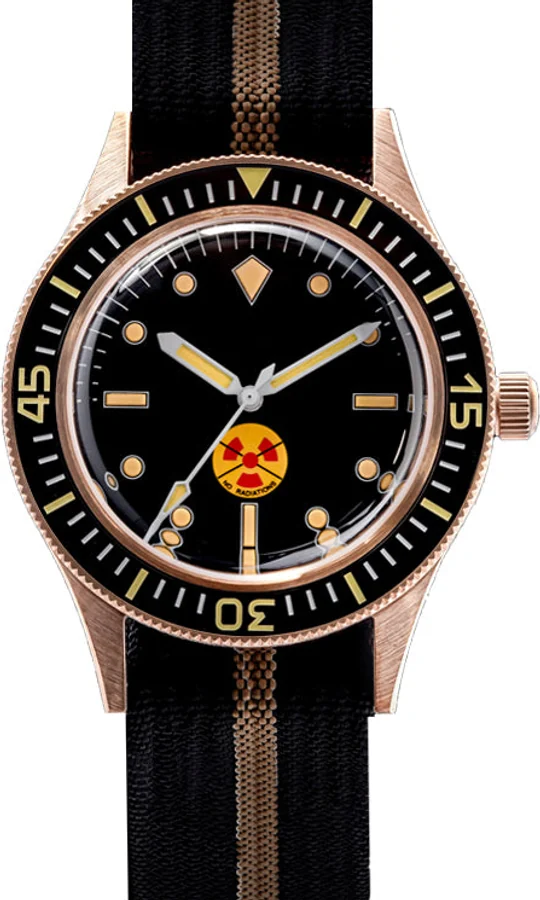
SHY038 Vintage 50-Fathoms Bronze Dive Watch (Without Logo)
A 40 mm bronze diver with a ceramic bezel
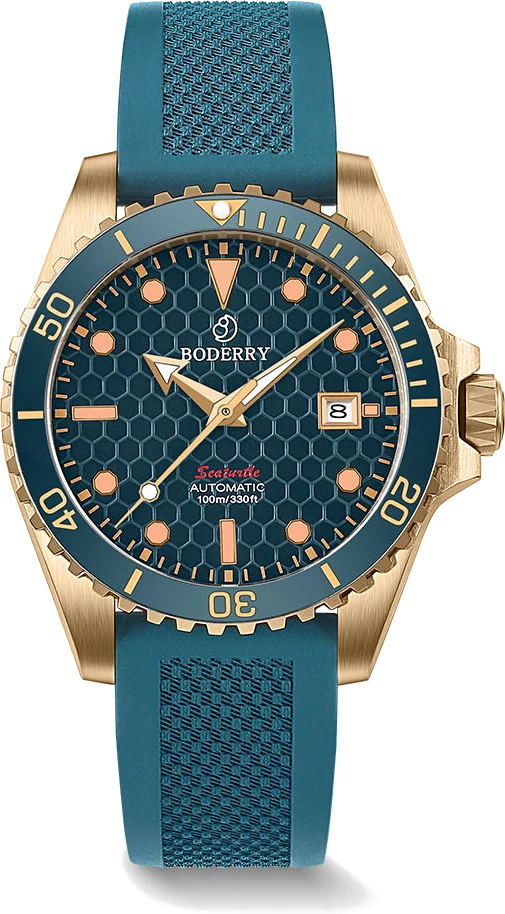
SeaTurtle Ocean Bronze Automatic Diver (Sea Blue/FKM)
Bronze warmth, a deep-blue dial and an everyday diver layout.
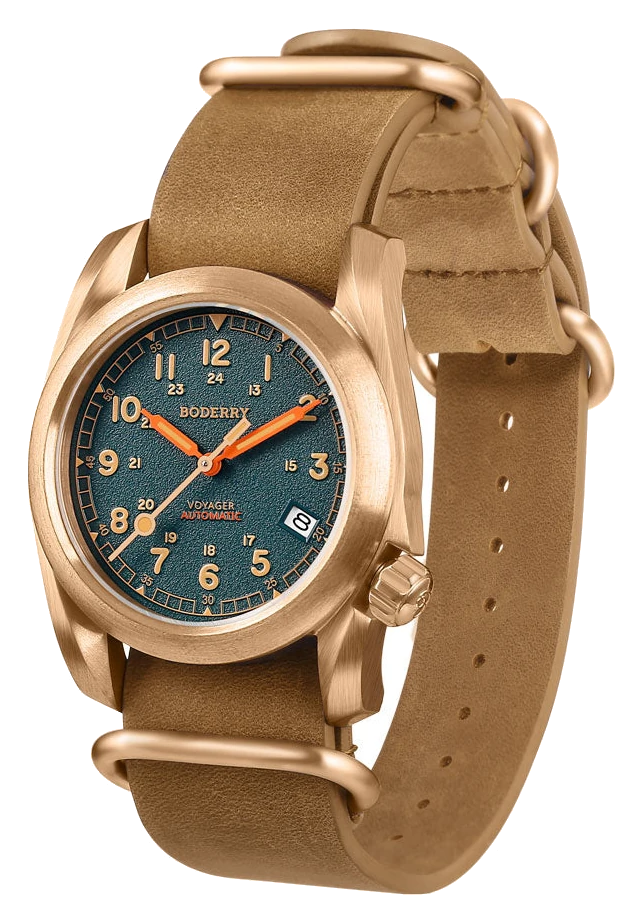
Voyager Bronze Automatic Field Watch (Sandstone Green)
A textured green dial in a bronze case that keeps changing.
A few good questions.
What is bronze watch patina?
A surface colour change caused by oxidation of the bronze, which typically darkens to brown and can turn green or blue-grey.
Does a bronze watch turn your wrist green?
It can leave a temporary green mark in warm or damp conditions. A steel case back reduces contact and the mark washes off.
Can I remove bronze patina?
Yes. Polishing returns the original colour, and the patina will develop again.
Is bronze water resistant?
Water resistance depends on the seals and the rating, not the metal. Check the listing for the watch’s rating.
How we write guides: we explain watchmaking from manufacturer documentation and published standards, and say plainly where numbers vary by brand or movement. Our approach.