
How it works.
Alongside the normal hour, minute and seconds hands, a GMT has a fourth hand driven to turn once every 24 hours. Set it to home time; it points to the hour on a 24-hour scale printed on the bezel or the dial. Because it is a 24-hour hand, you also know whether it is 3 am or 3 pm at home.
Using the bezel for a third zone.
- Set the main hands to local time and the GMT hand to home time against the bezel at its zero position.
- To read a third zone, rotate the bezel by the hour difference from home time.
- Read the GMT hand against the rotated bezel for that third zone.
Flyer vs caller (office) GMT.
On a flyer or true GMT, the local hour hand jumps in one-hour steps without stopping the watch, so you change local time on arrival and the GMT hand keeps home time. On a caller or office GMT, it is the GMT hand that jumps independently, which suits people who stay home and track a colleague’s time zone. Movements such as the Seiko NH34 are caller-style; many higher-end GMTs are flyers. Both are useful; flyers are preferred by frequent travellers.
Who should buy one.
Anyone who travels, calls family abroad or works with overseas teams. Because the complication is easy to read and adds little thickness, a GMT also makes a versatile everyday watch even if you rarely use it.
GMT watches we recommend.
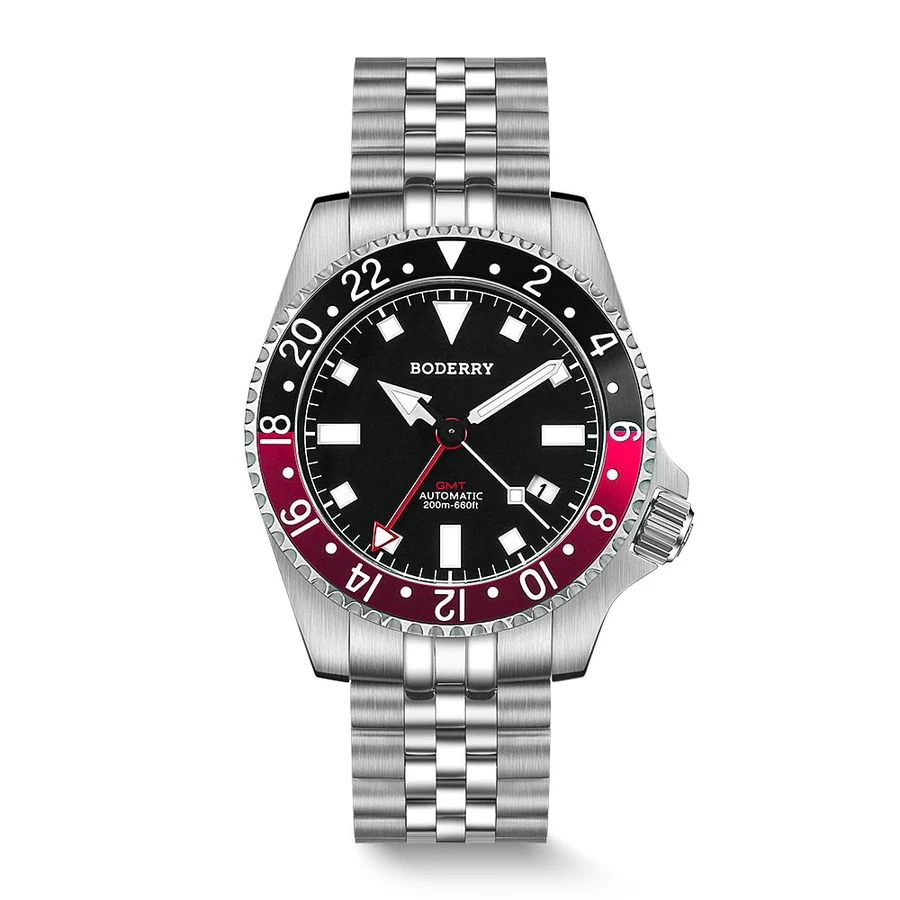
Admiral GMT Black
A titanium-bracelet GMT with a black-and-red diver profile.
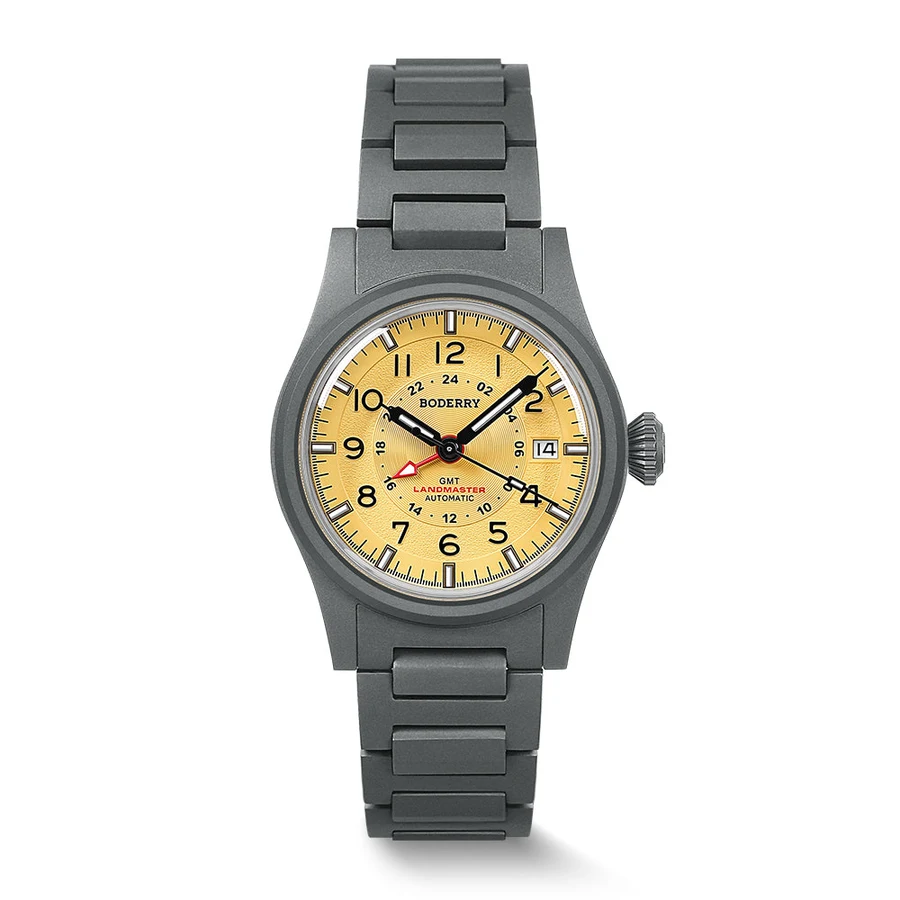
Landmaster GMT (Yellow Dial)
A true travel GMT with titanium and a vivid yellow dial
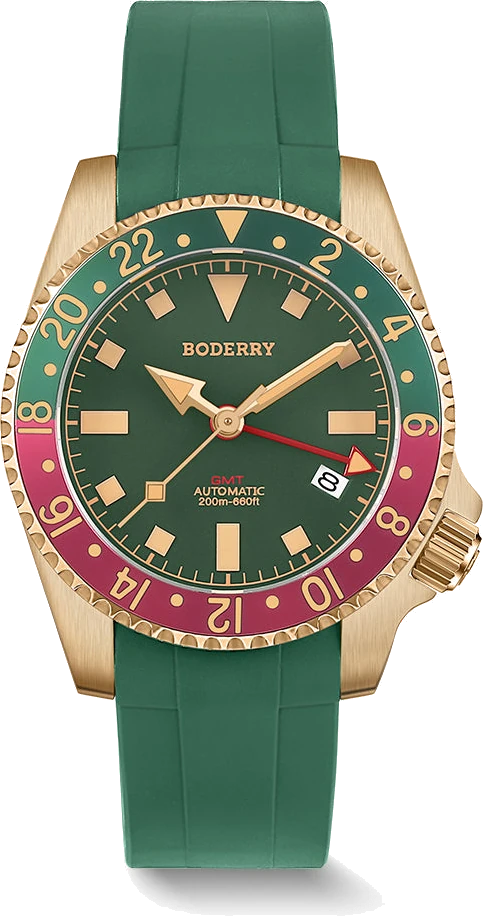
Admiral GMT Bronze Green
A green-dial GMT with a bronze case that changes with wear.
A few good questions.
What does GMT stand for on a watch?
Greenwich Mean Time. On a watch it means a second time-zone function, usually a 24-hour hand.
What is the difference between a GMT and a world timer?
A GMT tracks one or two extra zones with a hand and bezel; a world timer shows all 24 time zones at once on a city ring.
What is a true GMT?
Often used for a “flyer” GMT, where the local hour hand jumps independently so you can change local time without disturbing the minutes or home time.
How we write guides: we explain watchmaking from manufacturer documentation and published standards, and say plainly where numbers vary by brand or movement. Our approach.