
Everyday complications.
- Date: a window showing the day of the month. Needs correcting at the end of 30-day months on most watches.
- Day-date: adds the day of the week.
- GMT: a second time zone on a 24-hour hand. How GMT works.
- Chronograph: a stopwatch. How to use one.
- Power reserve indicator: shows how much energy is left in the mainspring.
Calendar and astronomical complications.
- Moon phase: a disc showing the moon’s phase, based on the roughly 29.5-day lunar cycle. Simple versions drift by about a day every few years.
- Annual calendar: knows 30- and 31-day months and needs correcting only once a year, at the end of February.
- Perpetual calendar: also knows February and leap years, needing no correction for decades if kept running.
- World timer: shows the time in all 24 time zones at once on a city ring.
High complications.
- Tourbillon: the escapement and balance sit in a rotating cage, originally designed to average out errors caused by gravity in a pocket watch. Today it is mainly a display of craftsmanship.
- Minute repeater: chimes the time on demand using tiny hammers and gongs.
- Split-seconds (rattrapante) chronograph: a second chronograph hand that can be stopped independently to time two events.
What complications cost you.
Every complication adds parts, thickness, price and servicing cost, and gives you more to set when the watch stops. For a first watch, a simple date or a GMT gives the most use for the least complexity. Why power reserve matters for complicated watches.
Complications in our collection.
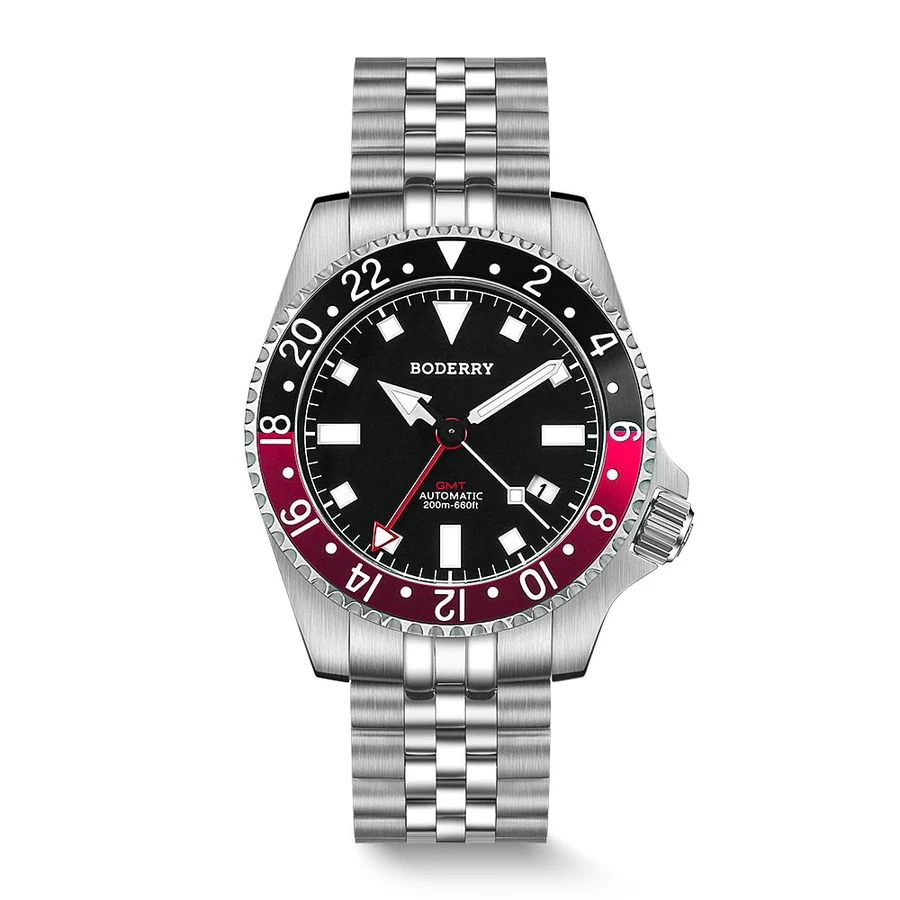
Admiral GMT Black
A titanium-bracelet GMT with a black-and-red diver profile.
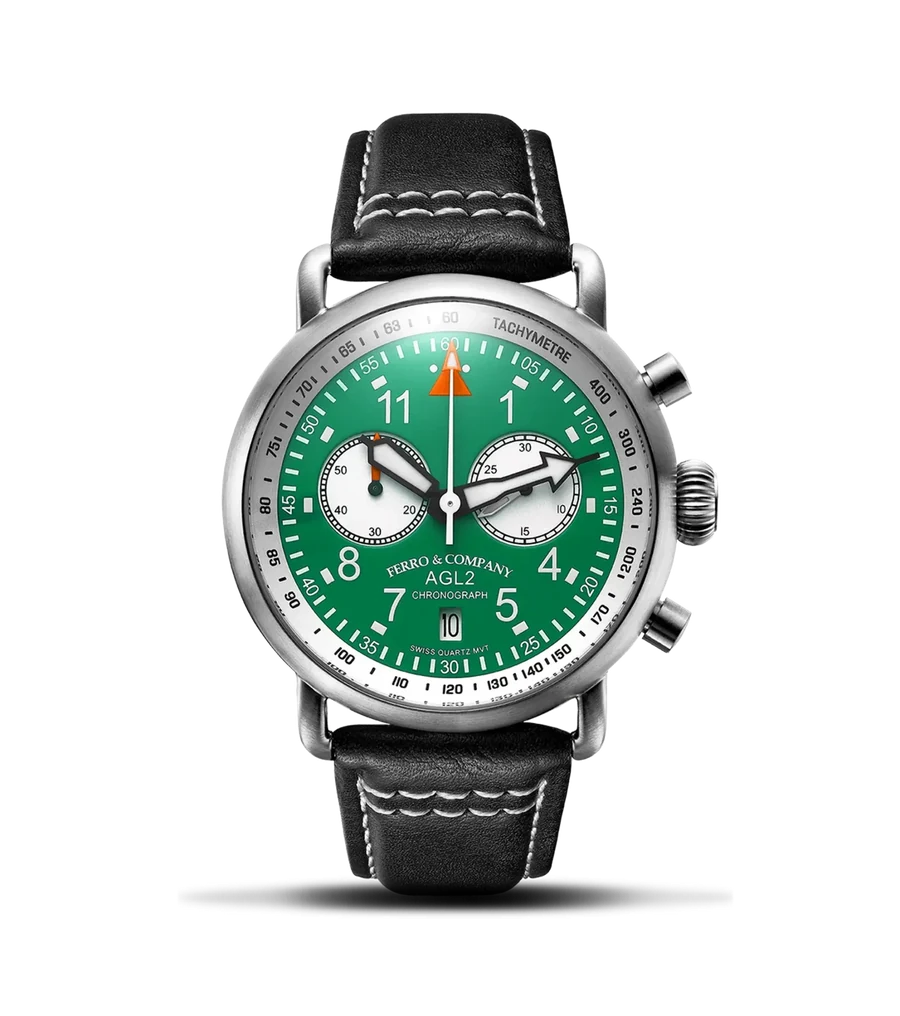
AGL 2 Chronograph Green
A vintage aviation chronograph with a clean green dial and practical quartz timing
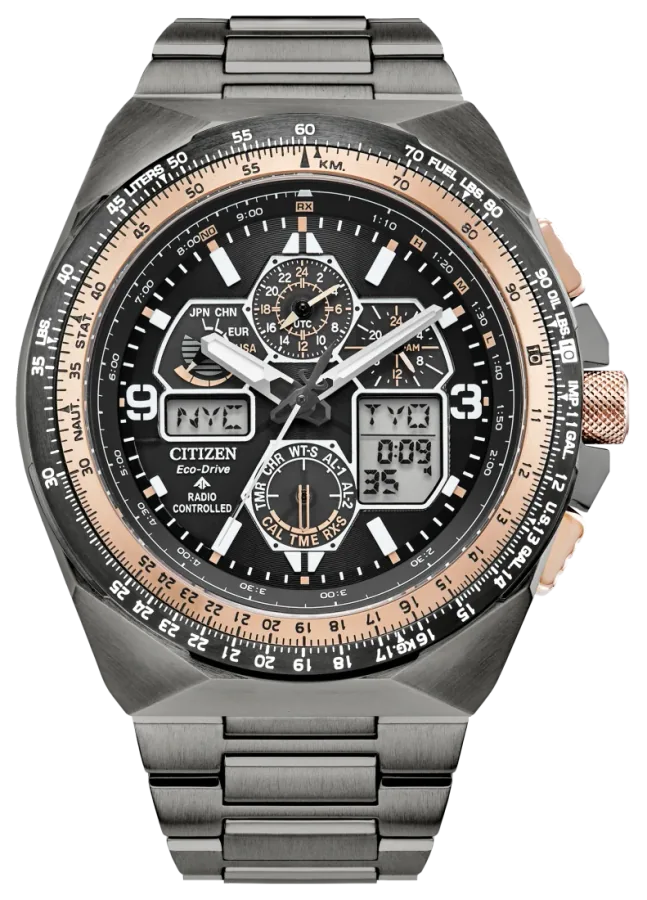
Promaster Skyhawk A-T 35th Anniversary
An anniversary Skyhawk with a dark instrument-panel look
A few good questions.
What is a complication on a watch?
Any function beyond hours, minutes and seconds, such as a date, GMT, chronograph or moon phase.
What is the most useful watch complication?
For most people, a date or a GMT second time zone.
What is the difference between an annual and a perpetual calendar?
An annual calendar needs correcting once a year at the end of February; a perpetual calendar accounts for February and leap years automatically.
How we write guides: we explain watchmaking from manufacturer documentation and published standards, and say plainly where numbers vary by brand or movement. Our approach.